
Why Pinterest Inspiration Isn’t a Design Plan

And what actually makes a room work
If you’ve ever saved 47 living rooms to a Pinterest board and still felt stuck…you’re not alone.
Pinterest is an incredible tool for gathering inspiration. It helps you identify styles you’re drawn to, color palettes you love, and spaces that make you pause mid-scroll.
But as you may have discovered:
Pinterest inspiration is not a design plan.
And confusing the two is often what leads to expensive mistakes, stalled projects, and rooms that feel “almost right” — but not quite.
Let’s break down why.
1. Pinterest Shows Finished Rooms — Not the Strategy Behind Them
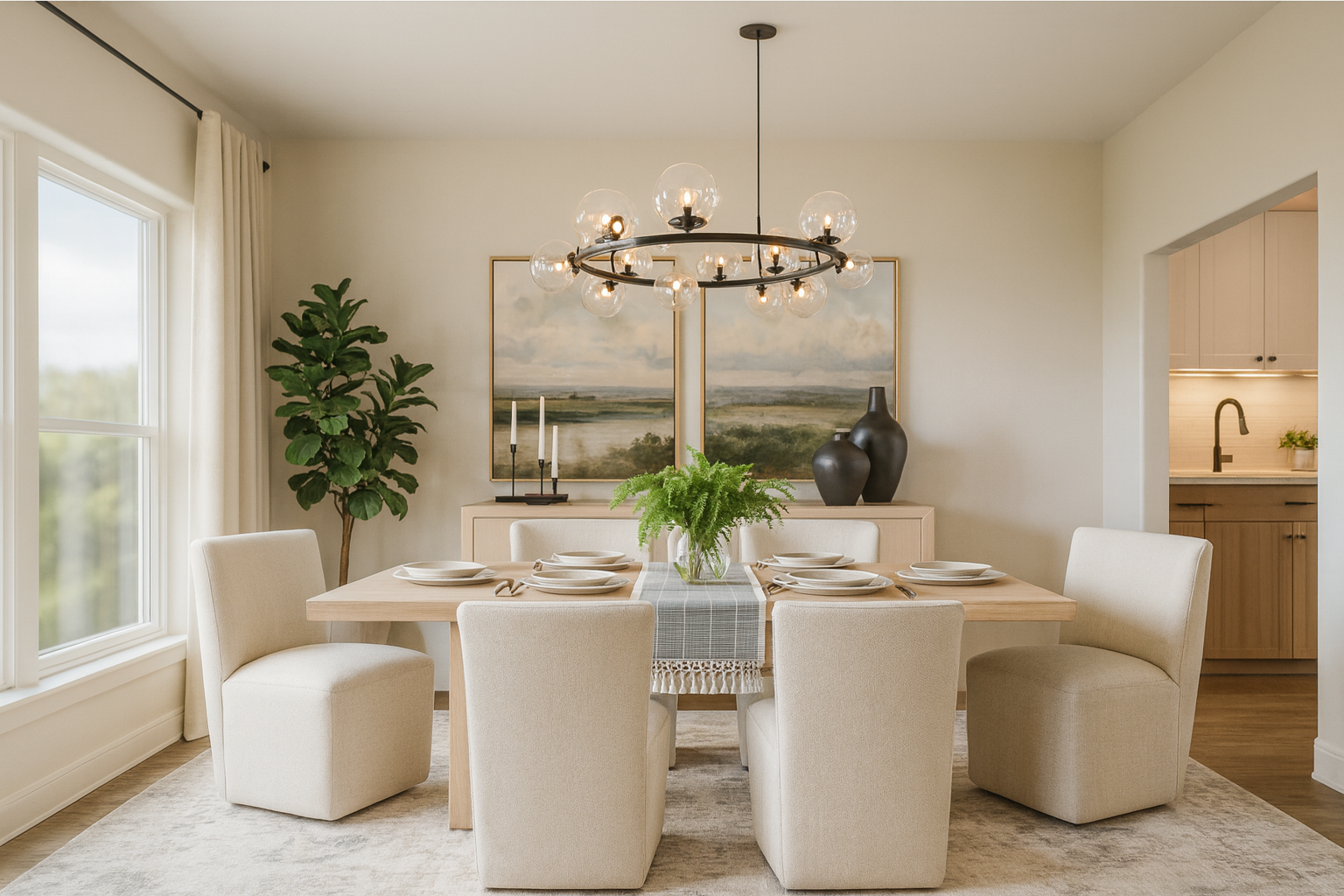
The images you pin are the final, polished result of dozens of design decisions:
- Strategically coordinated undertones across all elements
- Precise furniture scale and proportion
- Custom layout planning
- Lighting placement
- Architectural context
- Styling layers added at the very end
What you’re seeing on Pinterest is the outcome — not the plan that created it.
A design plan answers questions like:
- What are the exact room dimensions?
- Where are the windows and how does light shift throughout the day?
- What undertones are already present in flooring and cabinetry?
- How should traffic flow?
- What pieces are investment vs. temporary?
Pinterest doesn’t show you that part.
2. Rooms that You See Online Aren’t Designed for You
That stunning living room might have:
- 10-foot ceilings
- North-facing windows
- Wide plank white oak floors
- Custom millwork
- A completely different layout than yours
Trying to copy it exactly often results in frustration.
A true design plan works with and for your home — not against it.
This is why paint colors that look perfect online can feel completely wrong once they’re on your walls. Lighting, surrounding finishes, and adjacent spaces all shift how a color reads.
3. Inspiration Boards Create Style Clarity — Not Cohesion

Pinterest helps you identify patterns:
- You gravitate toward warm neutrals.
- You love mixed wood tones.
- You’re drawn to olive and rust accents.
- You prefer soft, layered minimalism over stark minimalism.
That’s incredibly valuable. But a design plan takes that insight and translates it into:
- Specific paint colors (with undertone consideration)
- Exact furniture dimensions
- Scaled layouts
- Material pairings
- A cohesive whole-home palette
Inspiration shows you what you like.
A design plan shows you how to execute it.
4. Pinterest Doesn’t Solve Scale & Proportion
One of the biggest mistakes I see? Beautiful pieces that are the wrong size.
- Sofas that are too small for the wall
- Rugs that don’t anchor the furniture
- Dining tables that crowd circulation
- Nightstands that are too low for the bed
Pinterest rarely lists dimensions.
A real design plan prioritizes:
- Furniture scale
- Spacing guidelines
- Clearance measurements
- Visual balance
That’s what makes a room feel effortless — even when you can’t immediately tell why.
5. A Design Plan Reduces Decision Fatigue
When you rely solely on inspiration images, every purchase becomes a new decision.
Is this the right white?
Is this rug too cool?
Will this chair work with that table?
Should the trim match the cabinets?
A design plan eliminates the guessing.
You’re not making isolated choices — you’re following a curated roadmap.
So What Is a Design Plan?
A design plan is:
- A cohesive color strategy
- A scaled layout
- Defined zones within the space
- Intentional material selections
- Clear guidance on where and how each element is used
It bridges the gap between inspiration and execution.
Pinterest is the spark.
The plan is the structure.
You need both — but they serve very different purposes.

The Takeaway
Save the images. Build the board. Get inspired.
But before you start ordering paint or furniture, ask:
Do I have a plan — or just a collection of pretty rooms?
Because the difference between “almost right” and “this feels amazing” is almost always strategy.
—
If you’re ready to turn your inspiration into a cohesive, professional plan, explore my personalized design services. Let’s make it intentional.
