
Creating Cohesion in Home Design

Cohesion is one of those design qualities you feel before you can name it. You walk into a home and something just makes sense — the palette flows, the materials speak to each other, and every room feels like part of the same story. But cohesion isn’t an accident. It’s a series of intentional choices designers make, room by room, to create a home that feels whole.
Here’s how that process actually works behind the scenes.
🌿 Start With a Home‑Wide Vision
Before a single room is touched, designers zoom out. We look at the home as a connected ecosystem — its natural light, architectural lines, existing finishes, and the emotional tone the client wants to live in.
This becomes the “north star” for every decision that follows:
- A shared color vocabulary
- A consistent material language
- A rhythm of shapes and textures
- A mood that carries from one room to the next
This is why cohesive homes feel effortless. They’re built on a foundation of clarity.
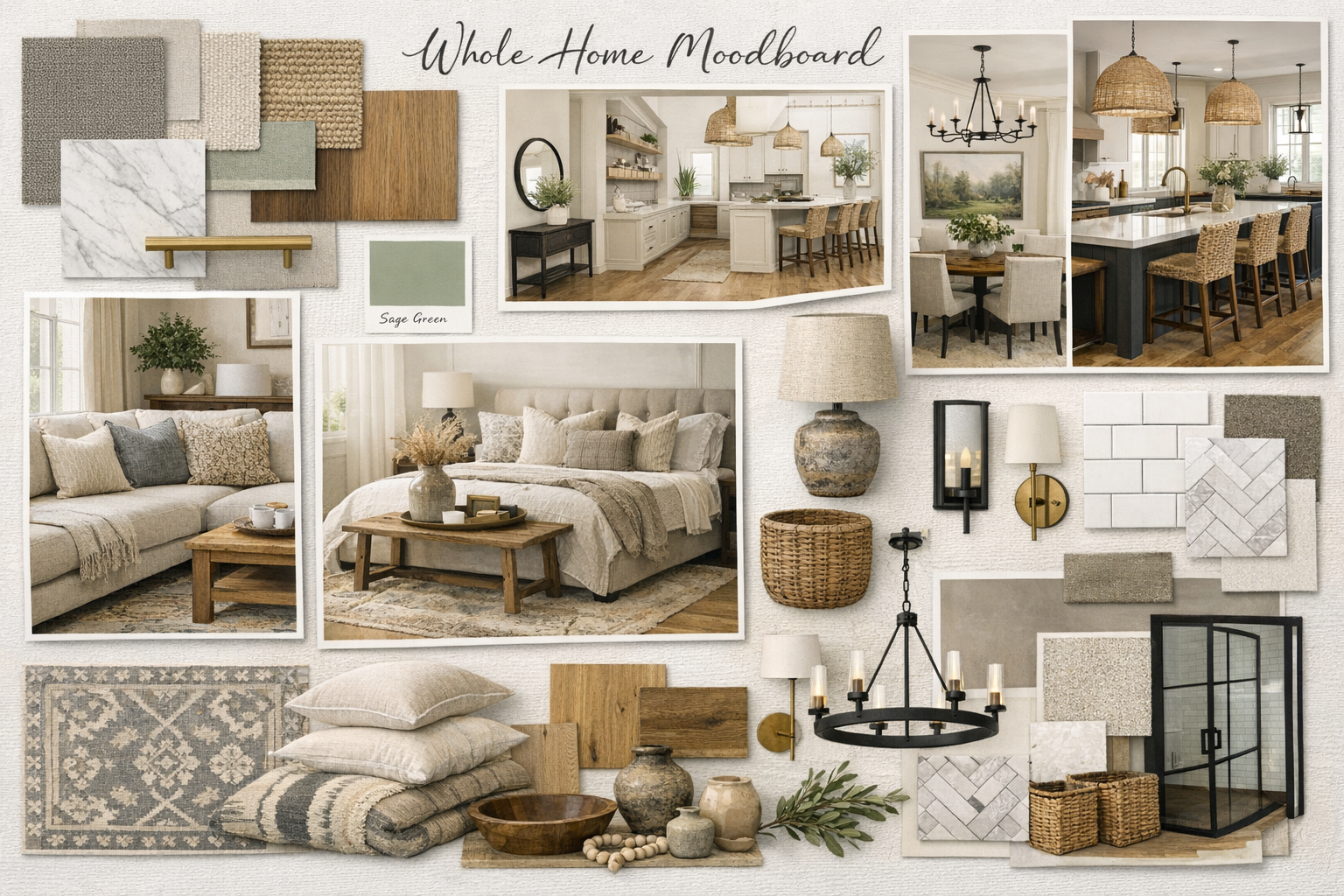
🎨 Build a Palette That Travels
A cohesive home doesn’t use the same color everywhere — it uses a relationship between colors.
Designers typically create:
- A primary palette (the anchor tones that appear throughout the home)
- A secondary palette (supporting colors used strategically in different rooms)
- Accent notes (sparingly used, but repeated enough to feel intentional)
The magic is in the repetition. A warm oak tone in the living room might reappear as a nightstand in the bedroom. A soft sage in the kitchen might echo in a throw pillow down the hall. These quiet callbacks create continuity without monotony.
🪑 Let Each Room Have a Purpose — and a Personality
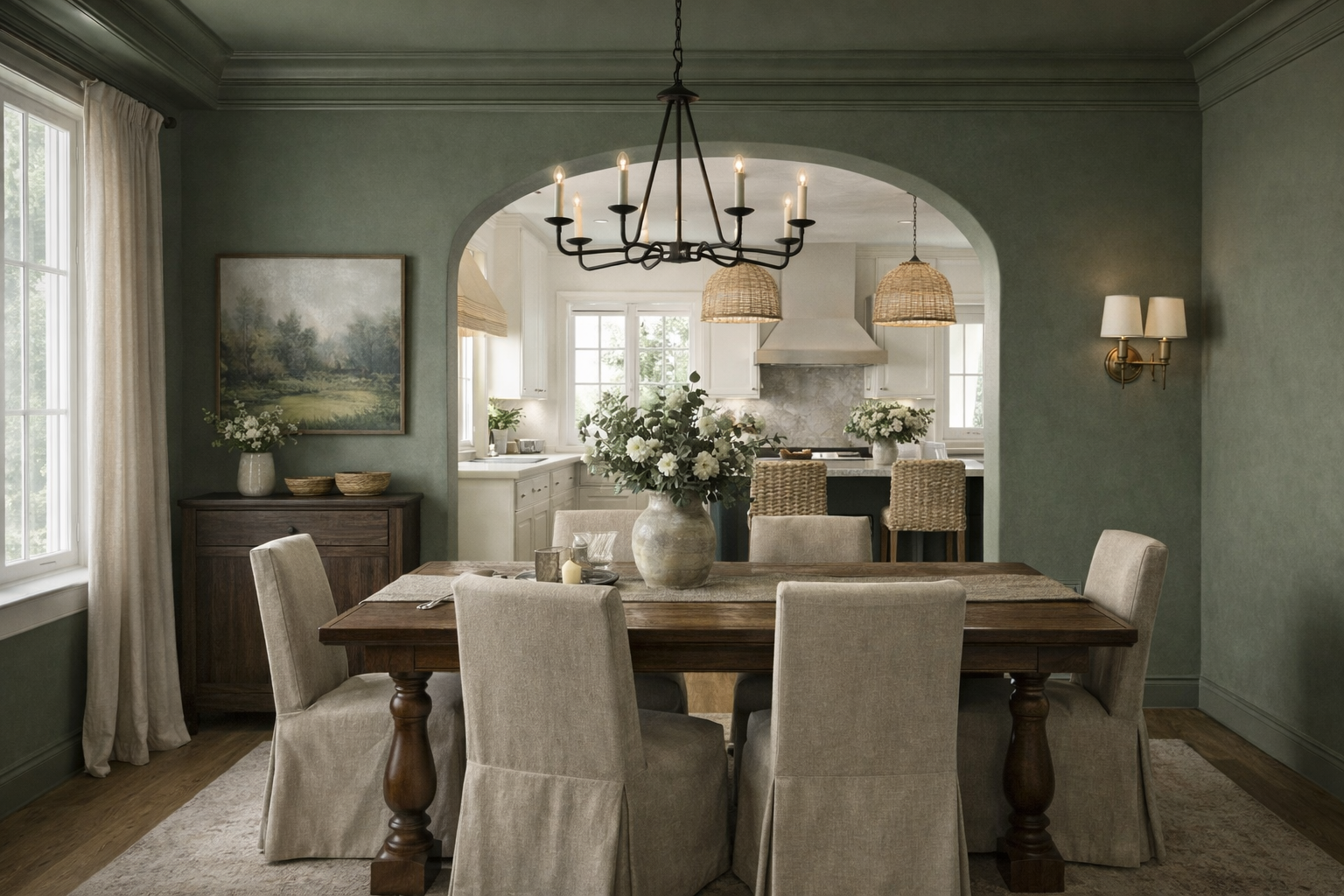
Cohesion doesn’t mean every room looks the same. Designers think of rooms like chapters in a book: connected, but distinct.
To strike that balance, we consider:
- Function: What does this room need to do for the people living here?
- Energy: Should it feel calm, social, playful, grounded?
- Hierarchy: Which rooms lead, and which ones support?
A moody dining room can still belong to a bright, airy home if the materials and palette tie back to the larger story.
✨ Repeat Elements With Intention
Repetition is one of the most powerful tools in design — but it’s subtle.
Designers repeat:
- Wood tones
- Metals
- Textures
- Shapes
- Lines
- Color temperatures
For example, if a home uses warm brass hardware, you might see it again in a lamp base, a picture frame, or a mirror. If the living room features soft, rounded silhouettes, the bedroom might echo that curve in a headboard or side table.
These visual relationships create harmony without feeling staged.
🧩 Balance Consistency With Contrast
Cohesion isn’t sameness — it’s connection.
Designers use contrast to keep a home dynamic, but contrast doesn’t just refer to color:
- Light vs. dark
- Soft vs. structured
- Matte vs. polished
- Organic vs. architectural
Contrast gives each room its own identity, while consistency ensures it still belongs to the whole.
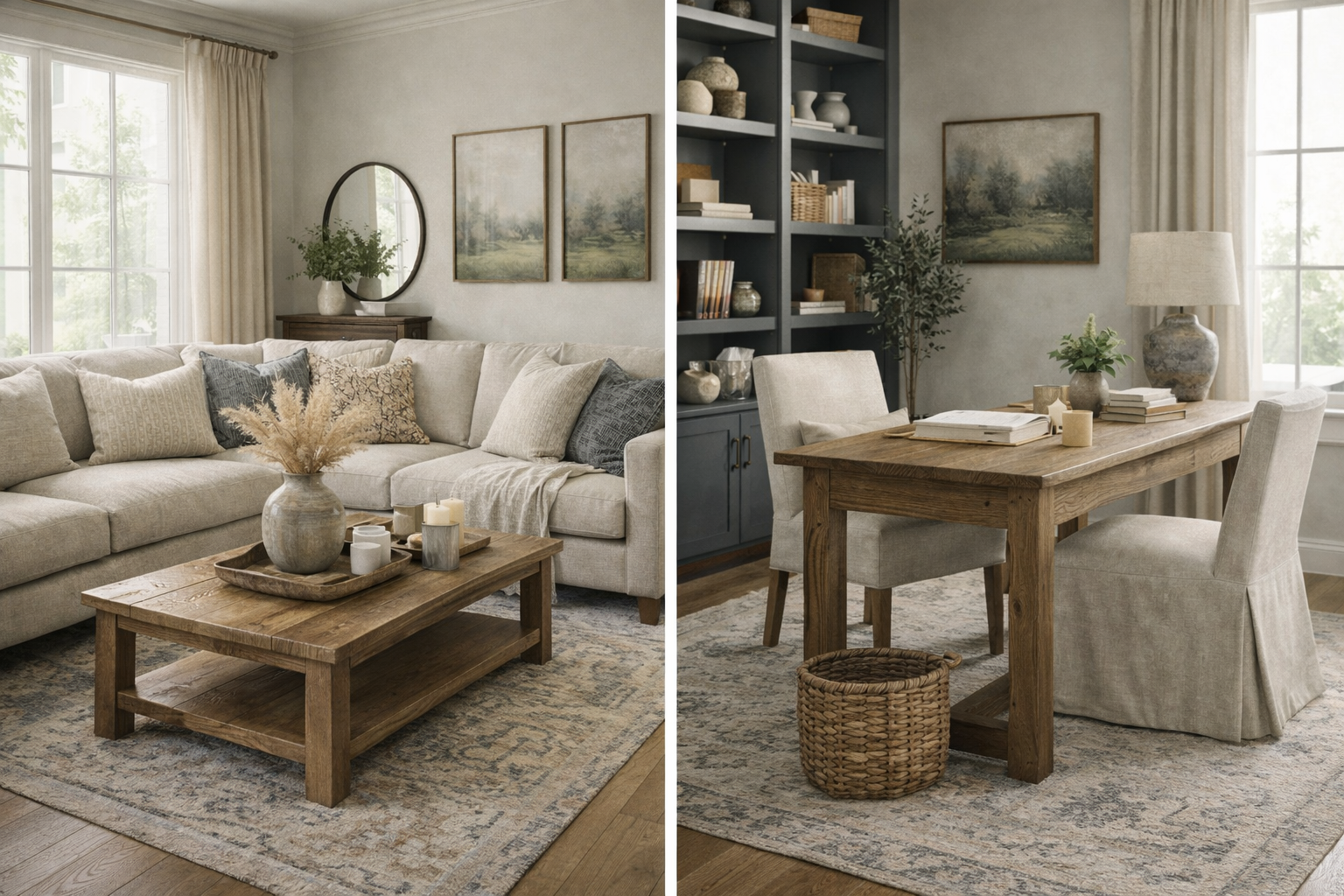
🛋️ Style With a Shared Language
Styling is where cohesion becomes visible.
Designers use:
- Similar styling principles
- Repeated materials (linen, ceramic, stone, wood)
- A consistent approach to negative space
- A recognizable rhythm in how objects are grouped
Even if the objects themselves differ, the approach stays the same — and that’s what makes the home feel unified.
🧭 Guide the Eye Through Transitions
Hallways, entryways, and sightlines matter more than people realize.
Designers pay close attention to:
- What you see from one room into the next
- How colors shift as you move through the home
- Where your eye naturally lands
- How lighting changes the palette throughout the day
A cohesive home feels good to walk through because the transitions are smooth and intentional.
❤️ Cohesion Is Emotional
At its core, cohesion isn’t just visual — it’s emotional. It’s the feeling of being held by your home. It’s clarity, calm, and belonging.
Designers create cohesion not by matching everything, but by building relationships between elements so the home feels like one continuous, thoughtful experience.
