

How to Choose the Right Art for Your Space
Artwork is one of the easiest ways to make a room feel finished, personal, and intentionally designed — but choosing the right piece is about more than simply matching your sofa.
You can choose beautiful furniture, paint the walls the perfect color, and carefully style every surface — but if the artwork feels wrong, the whole room can still feel unfinished.
Art is often one of the last things people choose, but it is one of the first things your eye notices when you walk into a space. The right piece creates a focal point, adds personality, reinforces your color palette, and brings the room together in a way that feels layered rather than random.
Here’s how to choose artwork for your home in a way that feels collected, cohesive, and designer-level — without overthinking every detail.
1. Start With the Feeling, Not the Colors
One of the most common mistakes people make is searching for artwork that simply “matches” the room. While color matters, the overall feeling of the piece matters more.
Before choosing artwork, ask yourself how you want the space to feel. Calm and relaxing? Warm and nostalgic? Sophisticated and dramatic? Fresh and coastal? Modern and collected?
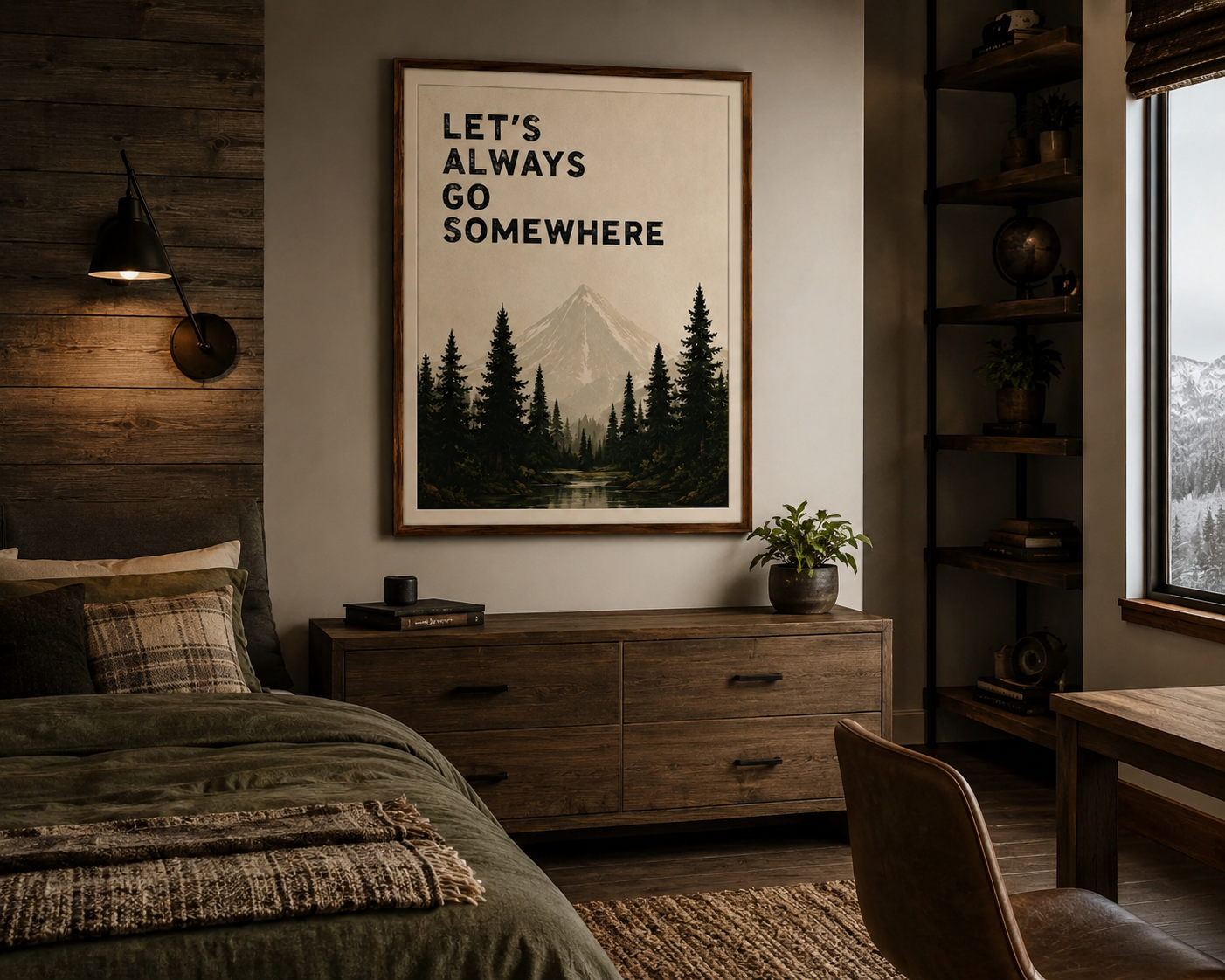
“Let’s Go” Digital Art Print
Vintage-inspired typography can bring personality and a sense of story to a space.
For example, a vintage-inspired print can make a room feel more adventurous and personal, while a soft abstract landscape may create a quieter, more restful feeling.
The goal is not to choose artwork that disappears into the room. The goal is to choose artwork that supports the atmosphere you want the room to have.
2. Let Your Color Palette Guide You
Art doesn’t need to include every color in the room, and it doesn’t always need to match.
Instead, think more about whether the art complements the room rather than copying it or competing with it. For example, a neutral room is often the perfect place for pops of color in art, allowing the art to become the focal point with a grounding neutral backdrop. On the other hand, if your room already contains bold colors, patterned fabrics, or colorful furnishings, quieter art such as black and white photography, charcoal sketches, or simple line drawings—can provide visual balance and give the eye a place to rest.
The goal is for the art to feel intentional. It should support the overall mood and style of the space without competing color or style-wise.
Rather than asking, “Does this artwork match my room?” ask yourself, “Does it reinforce the atmosphere I’m trying to create?”

“Citron” Digital Art Print Set
The right artwork does more than fill an empty wall—-it establishes mood, creates a focal point, and gives the room a more layered, intentional feel.
3. Choose the Right Scale
Artwork that is too small is one of the quickest ways to make a room feel awkward. A tiny piece floating above a large sofa, bed, or console usually feels disconnected rather than intentional.
If you are choosing between two sizes, the larger option is often the better choice. Large artwork creates presence, fills the wall more confidently, and makes more of a dramatic statement.

“Sea Glass Light” Digital Art Print
Large-scale artwork commands attention, making it an ideal choice for anyone looking to add “wow” factor or create a bold statement within the room.
4. Think About Visual Weight

“Midnight Blush” Digital Art Print Set Deeper tones can help anchor a lighter room and create a stronger focal point.
Art has visual weight, not just physical size.
A dark, high-contrast piece will feel heavier than a soft, pale abstract — even if both pieces are the same dimensions.
If a room already has darker furniture, heavy wood tones, or dramatic lighting, lighter artwork can help create balance.
If the room feels too light or washed out, artwork with deeper tones can help ground the space.
5. Use Art to Reinforce Your Interior Style
Artwork is one of the best ways to clarify the style of a room. The same sofa can feel coastal, modern organic, traditional, or contemporary depending on the art, lighting, textiles, and accessories around it.
Here are a few examples of how different types of artwork can support different design styles:
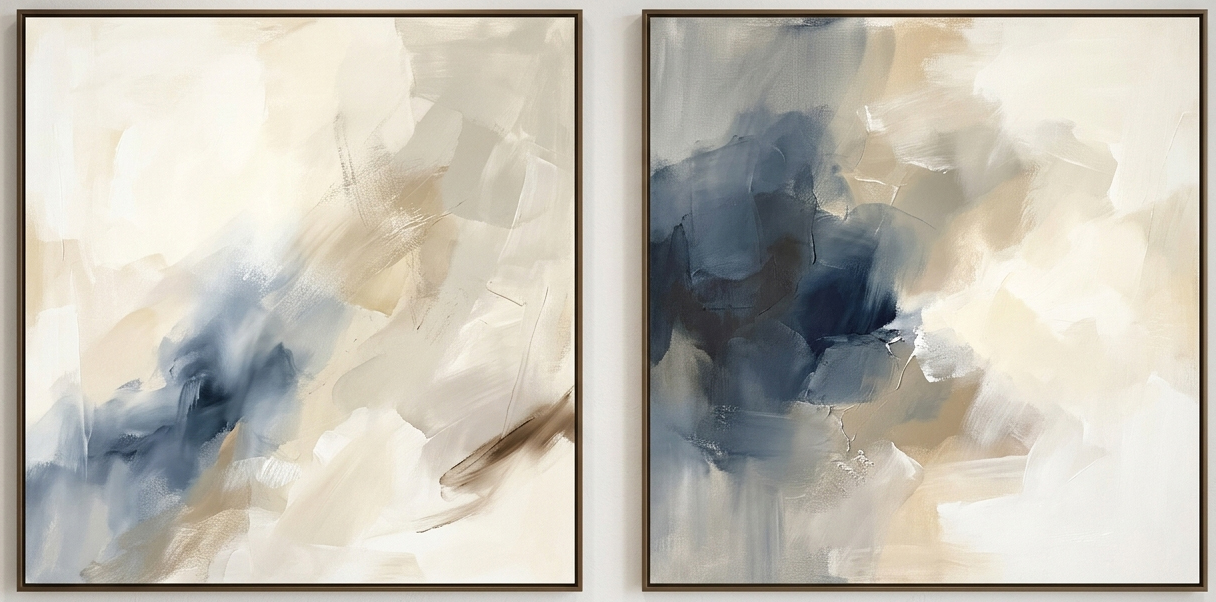
Modern Organic
Soft abstract art with deep blues, warm neutrals, and layered texture.

Soft Coastal
Muted blue-greens, quiet seascapes, and calm atmospheric color.

Vintage Photography
Timeless black and white photography adds contrast, sophistication, and quiet character without overwhelming the room.

Transitional
Painterly landscapes bring warmth, depth, and timeless character, helping create a room that feels collected, inviting, and enduring.
6. Gallery Walls Tell a Story
Not every space calls for one oversized statement piece. Gallery walls are a wonderful way to display multiple pieces of artwork while adding personality and creating a more collected, lived-in feel.
The most successful gallery walls aren’t simply a random collection of frames. They share a common thread—whether that’s a consistent color palette, similar subject matter, matching frame finishes, or a balanced mix of sizes and proportions. The individual pieces don’t need to match perfectly, but together they should feel intentional.
Gallery walls also offer incredible flexibility. They can grow over time as you collect meaningful artwork, photographs, travel memories, or family heirlooms. Whether you prefer a perfectly symmetrical arrangement or a more relaxed, organic composition, a thoughtfully designed gallery wall adds depth, personality, and visual interest that reflects your unique style.

A thoughtfully planned gallery wall creates a personalized focal point, transforming a blank wall into a curated collection that reflects your style and tells your story.
7. Choose Frames That Support the Room
Frames are part of the design, too. The same artwork can feel completely different in a black frame, natural wood frame, white frame, or brass frame.
Natural wood frames work beautifully in coastal, organic, farmhouse, and transitional spaces. Black frames add contrast and structure. Brass or gold frames feel more elevated and polished. White frames keep the look airy and subtle.
You do not need every frame in your home to match, but within one room, it usually helps to keep frame finishes related.
8. Don’t Fill Every Wall
Empty space is not a problem. In fact, breathing room is what allows artwork to feel important.
Instead of placing small pieces on every available wall, focus on the areas where artwork will have the most impact: above the sofa, over the bed, above a console, in a dining room, or along a hallway.
A few well-chosen pieces almost always look more elevated than several small pieces scattered around the room.
The Bottom Line
The best artwork is not chosen because it matches a pillow perfectly. It is chosen because it supports the feeling, scale, color palette, and personality of the room.
When the artwork feels connected to the rest of the space — through color, mood, size, framing, or subject matter — the whole room feels more intentional.
Artwork is not just something to fill an empty wall. It is one of the easiest ways to make a home feel layered, personal, and designed.
Explore Designer Artwork
Throughout this guide, you’ve seen examples from my own collection of printable artwork, created to coordinate with today’s most popular interior design styles — from soft coastal and modern organic to vintage lodge and contemporary abstract interiors.
Browse the Artwork Collection